
Commercial Auto Insurance in California
Affordable coverage for trucking, TCP, limo, delivery vans, and non emergency medical transportation (NEMT). Fast quotes and flexible options for new and high-risk businesses.
Coverage Options
Auto Liability
Primary liability coverage required for commercial vehicles operating in California, including TCP and trucking businesses.s.
Physical Damage
Covers your vehicles against collision, theft, vandalism, and other physical damage risks.
Motor Truck Cargo
Protects the goods and freight you transport against damage or loss during transit.
Non-Trucking Liability
Provides coverage when your truck is used for non-business or personal purposes.
Filings Support
Assistance with California CPUC, MCP, and federal filings required for transportation businesses.
Who This Is For
Owner Operators
Independent truckers needing comprehensive, tailored coverage.
Motor Carriers
Larger fleets moving goods across state lines.
Contractors
Local businesses utilizing heavy trucks for daily operations.
Commercial Auto Insurance
We specialize in commercial transportation insurance for TCP operators, limousine services, black car fleets, delivery vans, and non-emergency medical transportation (NEMT). Whether you’re starting a new business or expanding your fleet, we help you meet California requirements and secure competitive rates.
Our team understands the specific insurance needs for transportation businesses, including CPUC filings, compliance requirements, and high liability coverage.
- Specialized in TCP, NEMT, trucking, and commercial transportation insurance
- Fast, transparent quotes from multiple top rated insurance carriers
- Support with California compliance, filings, and ongoing policy management
When Do You Need Commercial Auto Insurance in California?
You may need commercial auto insurance when a car, truck, van, or SUV is used primarily for business. A personal auto policy may limit or exclude coverage for certain commercial activities, which could leave both you and your business financially exposed after an accident.
Commercial auto insurance may be necessary when:
- A vehicle is owned or registered by a business
- You transport passengers for payment
- You deliver food, packages, equipment, or other goods
- Employees drive company vehicles
- Employees use personal vehicles for business errands
- You travel between job sites or carry tools and materials
- A business contract, TCP permit, motor carrier permit, or other authority requires specific liability limits
Every business uses vehicles differently. Before selecting coverage, we review the vehicle type, business operations, drivers, travel radius, operating area, and contractual or regulatory requirements.
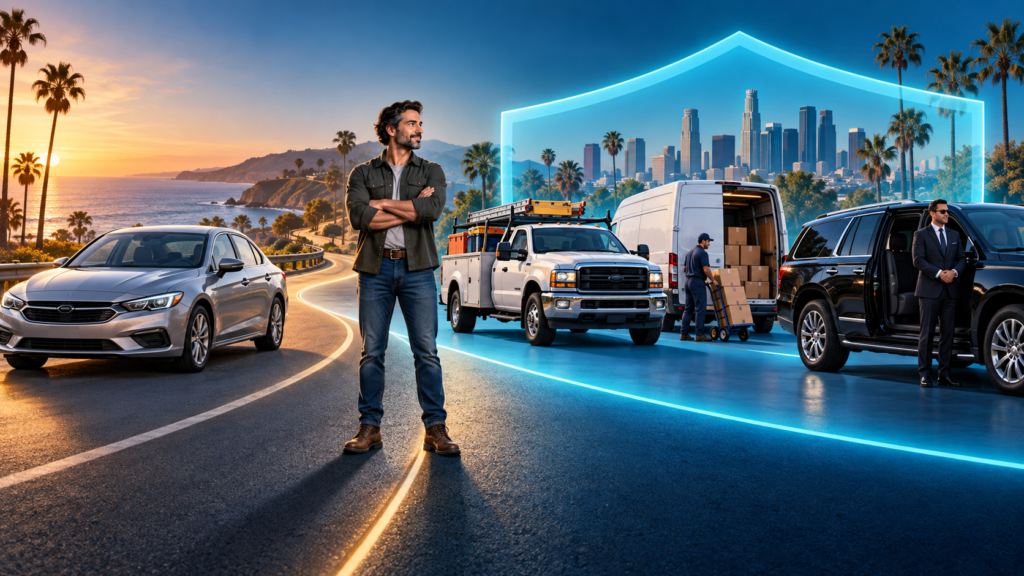
What Does Commercial Auto Insurance Cover?
Commercial auto insurance protects vehicles used for business and can help protect the business from financial losses caused by covered accidents. The exact protection depends on the policy, selected coverages, vehicle use, drivers, and applicable exclusions.
Auto Liability Coverage
Auto liability may pay for bodily injury or property damage caused to others when a covered driver is legally responsible for an accident. It may also help cover legal defense expenses, subject to the policy’s terms and limits.
Collision Coverage
Collision coverage may pay to repair or replace an insured vehicle after it is damaged in a collision with another vehicle or object. A deductible generally applies.
Comprehensive Coverage
Comprehensive coverage may cover theft, vandalism, fire, falling objects, weather related damage, glass damage, and certain other losses not caused by a collision. Coverage remains subject to the deductible and policy terms.
Uninsured and Underinsured Motorist Coverage
This coverage may help protect covered drivers and occupants when an at fault driver has no insurance or does not have enough insurance to pay for a covered loss. Availability and requirements can vary.
Hired Auto Liability
Hired auto liability may protect the business when it rents, leases, hires, or borrows vehicles for business purposes. It generally does not pay for physical damage to the rented vehicle unless separate coverage is included.
Non-Owned Auto Liability
Non-owned auto liability may protect the business when employees use their personally owned vehicles for work related activities. It does not replace the employee’s personal auto insurance and generally does not cover physical damage to the employee’s vehicle.
Cargo, Tools and Equipment Coverage
Commercial auto insurance does not automatically cover every item carried inside a vehicle. Cargo, tools, materials, and equipment may require motor truck cargo, inland marine, or another separate coverage.
Coverage options and availability vary by insurer, business operation, vehicle type, and underwriting requirements.
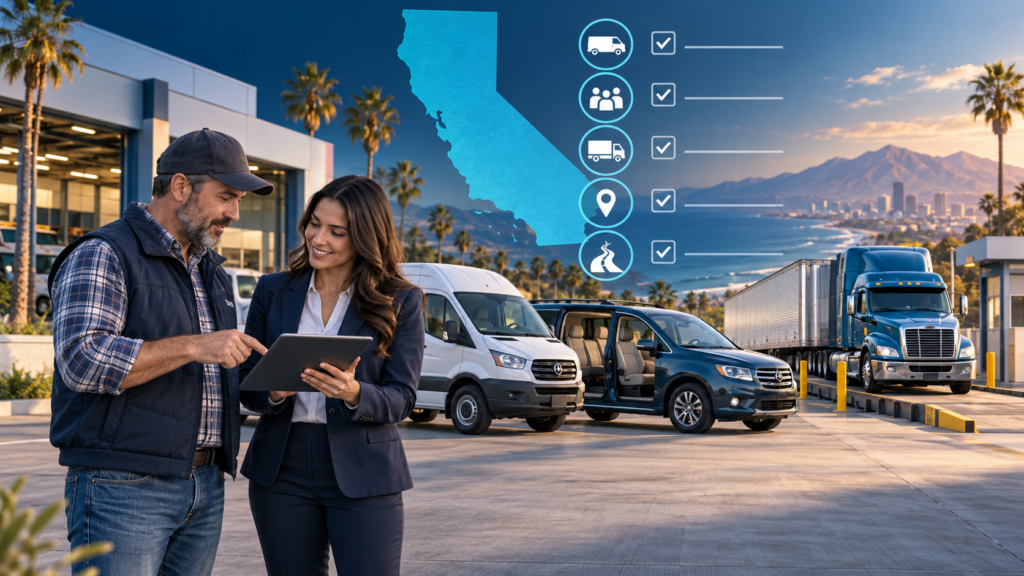
California Commercial Auto Insurance Requirements
California commercial auto insurance requirements are not identical for every business. The required liability limits and insurance filings depend on the vehicle, business activity, operating authority, passenger capacity, cargo, and whether the operation is intrastate or interstate.
California Business Vehicles
Vehicles owned or regularly used by a business must maintain the financial responsibility required by California law. However, businesses may need limits higher than the general state minimum because of their operations, contracts, permits, or exposure to larger claims.
TCP and Passenger Transportation
Charter party carriers, limousine operators, black car services, and certain other for hire passenger transportation businesses may be regulated by the California Public Utilities Commission. The required liability limit can depend on the type of authority and the vehicle’s seating capacity.
Proof of qualifying insurance must generally be filed with the CPUC before regulated operating authority can become active. Passenger carriers with employees may also be required to maintain workers’ compensation insurance.
Motor Carriers and Commercial Trucks
Commercial trucking businesses may be subject to California Motor Carrier Permit requirements. Applicable insurance requirements depend on factors such as vehicle weight, cargo, business operations, and operating territory.
Businesses operating across state lines or under federal operating authority may also be subject to Federal Motor Carrier Safety Administration requirements. Federal limits and filing forms vary according to the carrier’s operation, vehicle size, passenger capacity, and commodities transported.
Contractual Insurance Requirements
Freight brokers, airports, government agencies, transportation networks, and commercial clients may require liability limits or additional coverages that exceed the legal minimum. Meeting California’s minimum requirement does not automatically mean a policy satisfies every contract or permit.
Caspian Coverage helps review your operation, determine the insurance information requested by the applicable authority, and coordinate available insurance filings with the insurer.
What Is Needed to Get Commercial Auto Insurance?
Accurate information is important when applying for commercial auto insurance. Insurers use this information to determine eligibility, classify the operation correctly, calculate the premium, and identify the appropriate coverage options.
Most commercial auto insurance applications require:
Business Information
- Legal business name and DBA, if applicable
- Business address and garaging location
- Federal Employer Identification Number, when required
- Years in business and relevant industry experience
- Detailed description of business operations
Vehicle Information
- Year, make and model
- Vehicle identification number
- Current mileage
- Purchase price or estimated value
- Ownership or leasing information
- Vehicle weight or seating capacity, when applicable
- Any permanently attached equipment or modifications
Driver Information
- Full names and dates of birth
- Driver’s license numbers and states
- Driving experience and license class
- Accident and violation history
- Commercial driving experience, when applicable
Operating Information
- How each vehicle is used
- Estimated annual mileage
- Typical and maximum operating radius
- States or territories in which the business operates
- Types of passengers, products, cargo, tools, or equipment transported
Insurance and Loss History
Insurers may request current policy documents, prior coverage information, and loss runs. Loss runs are reports showing the business’s insurance claims history for a specified period.
New ventures may still qualify for commercial auto insurance, but available insurers, coverage terms, documentation requirements, and pricing may differ from those offered to established businesses.
How Are Commercial Auto Insurance Prices Determined?
Commercial auto insurance does not have one standard price. Insurers evaluate the specific risks associated with the business, vehicles, drivers, and operations. Two companies with similar vehicles can receive very different premiums if their drivers, routes, experience, or business activities are different.
Important pricing factors include:
Business Type and Vehicle Use
A contractor traveling between local job sites presents a different risk than a limousine operator carrying passengers or a truck transporting cargo across multiple states.
Vehicles Being Insured
The vehicle type, weight, age, value, repair cost, safety features, and permanently attached equipment may affect the premium. Larger or more expensive vehicles can cost more to repair and may create greater liability exposure.
Drivers and Driving Records
Insurers generally review driver age, licensing, experience, accidents, violations, suspensions, and other information appearing on motor vehicle records. A driver’s record can affect both eligibility and price.
Mileage and Operating Radius
Vehicles driven frequently, over long distances, or in heavily congested areas may present greater exposure than vehicles used occasionally within a limited local radius.
Coverage Limits and Deductibles
Higher liability limits and additional coverages generally increase the premium. Selecting a higher physical damage deductible may reduce part of the premium, but it also increases the amount the insured must pay after a covered loss.
Insurance and Claims History
Prior claims, severity of losses, gaps in coverage, and the length of continuous commercial insurance may affect pricing. Insurers may also consider the business’s experience and safety history.
Passengers, Cargo and Special Operations
Transporting passengers, valuable cargo, hazardous materials, vehicles, or specialized equipment can change the risk classification and insurance requirements.
The lowest priced policy is not always the right policy. The business operation must be described accurately so that the insurer understands the actual vehicle use and can offer coverage appropriate for the exposure.